
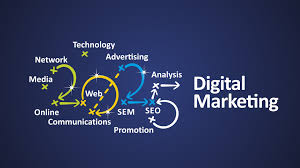
The Digital Marketing Revolution Accelerates
Remember when “going viral” was the ultimate goal? Or when simply having a Facebook page felt innovative? The digital marketing landscape now evolves at lightning speed, leaving yesterday’s winning tactics obsolete almost overnight.
In 2025, this acceleration is only intensifying. Marketers clinging to outdated tactics—like over-relying on third-party cookies or producing generic content—are finding themselves invisible, irrelevant, and outpaced.
The gap between innovation and execution is widening. New platforms emerge, algorithms change without warning, privacy regulations tighten, and audience expectations skyrocket. Chasing every new trend without a strategic anchor is a guaranteed way to burn through budgets.
This guide isn’t just another list of predictions. It’s a comprehensive, action-oriented blueprint designed to help you and your team dominate the digital landscape in 2025.
We’ll unpack the macro shifts shaping the year, explore nine major digital marketing trends, and show how to turn these insights into practical, measurable strategies tailored for the Australian market.
What’s Changing in 2025: The Macro Shifts You Must Understand
The Decline of Traditional Targeting and the Rise of Consent-Driven Data
The era of tracking users with third-party cookies is coming to a close. Google’s long-delayed phase-out of third-party cookies in Chrome, coupled with Apple’s privacy-first approach, has reshaped digital advertising as we know it.
Consumers are increasingly protective of their personal information. Success now relies on zero-party data (information customers voluntarily share) and first-party data (collected directly from your channels).
Building direct, trust-based relationships is no longer optional—it’s essential. Implement transparent mechanisms for collecting and managing consented data, and invest in Customer Data Platforms (CDPs) that unify disparate data into a single customer view.
Stat: Forrester predicts that by mid-2025, 80% of marketers will rely heavily on zero- and first-party data.
Generative AI Becomes Mainstream
Generative AI is no longer a novelty—it’s embedded across marketing workflows. From drafting content to creating visuals, scripting videos, and personalising website experiences, AI is everywhere.
However, over-reliance on automation can produce generic, factually shaky, or emotionally flat content. AI is a powerful assistant, but it cannot replace human insight, creativity, or empathy.
As Rand Fishkin, Founder of SparkToro, says: “AI is great at producing competent mediocrity at scale. Human marketers are needed for true insight, creativity, and strategic connection.”
The Rise of Content Ecosystems over Linear Funnels
The traditional marketing funnel—Awareness, Consideration, Decision—is outdated. Today’s audiences move fluidly across a web of touchpoints: social media, search, podcasts, reviews, and online communities.
Smart marketers are shifting towards content ecosystems—interconnected hubs of valuable information and experiences that engage audiences at every stage.
These ecosystems thrive on:
- Owned media hubs (resources, blogs, tools)
- User-generated content and community engagement
- Digital PR and expert collaborations
- Multi-format storytelling across video, podcasts, and newsletters
Brands such as HubSpot and Adobe illustrate how valuable it is to become a destination, not just a vendor.
The 9 Digital Marketing Trends Defining 2025
1. AI-Powered Personalisation at Scale
Generic messaging is dead. Consumers expect experiences tailored to their unique needs and behaviours. AI now makes that level of personalisation achievable.
Applications include:
- Dynamic website content that adapts in real-time
- Hyper-personalised email sequences triggered by behaviour
- Intelligent chatbots and conversational AI for real-time support
- AI-generated ad variations optimised per audience segment
A practical example: An Australian outdoor retailer used AI-driven recommendations based on weather patterns and browsing history, achieving a 24% lift in conversions within three months.
2. Video Search Optimisation (VSEO)
Search is no longer just about written content. Platforms like YouTube, TikTok, and Instagram now function as powerful search engines.
Key tactics:
- Keyword-rich video titles and descriptions
- Accurate transcripts and captions
- Engaging thumbnails and hooks
- Timestamped chapters for longer videos
- Leveraging platform-specific features such as hashtags and playlists
VSEO ensures visibility across platforms where Australians increasingly discover products and ideas visually, not textually.
3. Voice Search and Multimodal AI
Voice-activated searches are reshaping SEO. Australians use devices like Google Home, Siri, and Alexa to find quick answers and local services.
To capitalise:
- Optimise for conversational, question-based keywords
- Add structured FAQ schema
- Strengthen local SEO (accurate business listings and reviews)
- Provide clear, concise answers that voice assistants can read aloud
The rise of multimodal AI (combining voice, image, and text inputs) will further enhance how users search and interact.
4. Privacy-First Marketing and Consent Management
Data privacy isn’t just a legal issue—it’s a trust issue. With global regulations tightening and Australian consumers becoming more privacy-conscious, compliance and transparency are critical.
Adopt tools such as OneTrust or Cookiebot for managing consent, and ensure your analytics setup respects user privacy. Communicate clearly about how and why you collect data, offering value in return for consent.
Brands that prioritise ethical data use will gain a long-term competitive advantage.
5. Long-Form Value Content Wins
Google’s ongoing focus on E-E-A-T (Experience, Expertise, Authoritativeness, Trustworthiness) rewards in-depth, expert content. Thin, keyword-stuffed articles no longer rank.
Winning strategies:
- Build pillar pages supported by detailed cluster articles
- Incorporate original data, research, or expert commentary
- Write for depth, clarity, and user intent—not just algorithms
High-quality, long-form content earns backlinks, trust, and conversions.
6. Trust-Focused Influencer Marketing
Audiences increasingly trust smaller, authentic creators over big-name influencers. The rise of micro (10k–100k followers) and nano (<10k followers) influencers has transformed partnership models.
For Digital Smashers-style marketing, this means:
- Prioritising niche voices with strong community trust
- Partnering for long-term value, not one-off posts
- Measuring meaningful engagement—comments, saves, and conversions—over vanity metrics
Authenticity drives results, especially in Australia’s close-knit digital communities.
7. Semantic Search: From Keywords to Context
Google’s AI-driven Search Generative Experience (SGE) is changing SEO. Search results now deliver comprehensive answers directly on the results page.
Your strategy must include:
- Thematic keyword clusters
- Structured data (schema markup)
- Conversational, question-based content
- Deep intent mapping and context-aware CTAs
The goal: Create authoritative, contextual content that earns visibility—even in zero-click searches.
8. AR/VR and Spatial Marketing
Augmented and virtual reality are moving beyond novelty. In Australia, industries such as retail, real estate, and tourism are embracing immersive technologies.
Examples include:
- Virtual property tours
- AR try-on experiences for retail
- Interactive educational or event spaces
Start small with accessible WebAR campaigns that add genuine value to your customer journey.
9. Digital Smashers Goes Direct-to-Audience (D2A)
Digital Smashers buyers, like modern consumers, crave authenticity, insight, and community before making purchase decisions. The Direct-to-Audience (D2A) model builds loyal, engaged audiences through consistent, high-value content.
Tactics include:
- High-quality newsletters and insights
- Expert-led webinars and online learning hubs
- Community groups via Slack, Discord, or private networks
- Integrating educational content with soft selling
Brands adopting this approach generate trust and inbound demand—without relying on intrusive outreach.
Turning Trends into Competitive Advantage
Understanding trends is one thing; executing them effectively is another.
1. Build a First-Party Data Engine
Create a continuous loop that attracts, captures, and activates consented customer data. Use quizzes, gated resources, and surveys to enrich your database and personalise your communications.
2. Shift from Funnels to Ecosystems
Visualise customer journeys as interconnected loops across channels. Encourage engagement that naturally flows between social, community, website, and email touchpoints.
3. Modernise Your Marketing Stack
Invest in:
- Customer Data Platforms (CDPs) such as Segment or Tealium
- AI-powered content tools like Jasper or Mutiny
- Privacy-first analytics platforms such as GA4, Plausible, or Fathom
- Integrated CRM and marketing automation systems such as HubSpot or Salesforce
Choose scalable, integrated tools that support privacy, AI, and personalisation.
Lessons from 2024 Campaigns
A Digital Smashers software company doubled its organic traffic using an AI-assisted pillar-cluster strategy. By pairing deep human expertise with AI-generated outlines, they created comprehensive, expert content that ranked high and built credibility.
Results included:
- 110% increase in organic traffic
- 40% growth in qualified leads
- Consistent improvement in search visibility for key semantic clusters
The lesson: human expertise plus AI efficiency delivers exceptional results.
The Data Snapshot: 2025 in Numbers
- 73% of marketers use Generative AI in workflows (HubSpot, 2024)
- 65% of consumers have stopped buying from brands over privacy concerns (Cisco, 2023)
- Companies with strong first-party data strategies achieve 1.5x revenue growth (BCG)
- Experience-led content is 3x more likely to rank in top search results (Google)
- 84% of Digital Smashers buyers say community participation influences decisions (CMX, 2023)
Pitfalls to Avoid
Don’t Chase Every Trend
Focus on what aligns with your brand goals, audience, and capacity. Prioritise depth over breadth.
Don’t Over-Rely on AI
Always apply human editing, brand voice refinement, and fact-checking. AI assists, but creativity connects.
Don’t Ignore Privacy Compliance
Australian privacy laws are tightening. Use consent management tools, maintain transparency, and seek legal guidance where necessary.
Conclusion: The Marketer’s 2025 Playbook
The digital landscape of 2025 demands more than adaptation—it requires transformation. Success belongs to those who combine technology with human empathy, data with ethics, and innovation with strategy.
To thrive in 2025:
- Leverage AI intelligently
- Prioritise trust and transparency
- Build content ecosystems that engage and educate
- Create communities that sustain loyalty
The future of digital marketing in Australia isn’t about chasing trends—it’s about building lasting value and meaningful connections.
Ready to Lead the Charge?
Subscribe to our newsletter for weekly strategies, or book a complimentary 30-minute strategy session with our Digital Smashers experts to identify your biggest growth opportunities for 2025.